
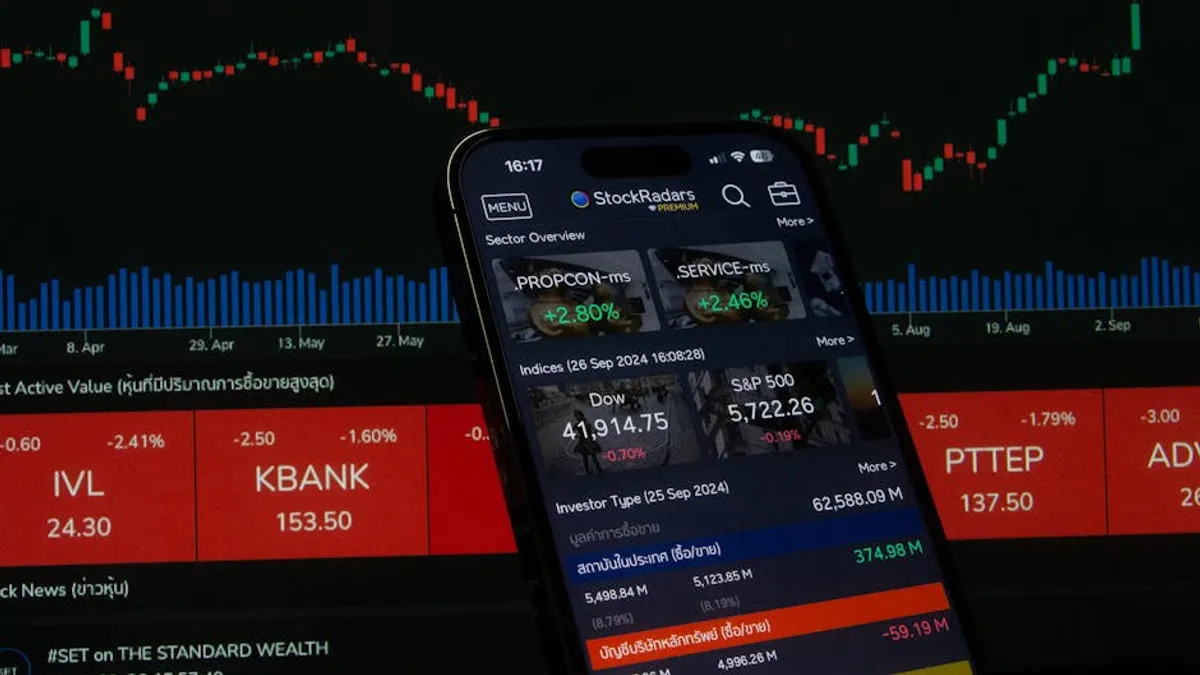
For any digital platform dealing with financial information, the accurate and timely display of share price updates is not merely a feature; it is a fundamental requirement that underpins user trust and commercial viability. Whether building a financial news portal, an investment tracking application, or an analytical dashboard, understanding the mechanisms behind share price dissemination is critical. This involves navigating complex data sources, technical integration challenges, and stringent regulatory frameworks. The integrity of the data presented directly impacts user decisions, platform credibility, and ultimately, the site's ability to attract and retain an engaged audience. Understanding the integrity of the data presented directly impacts user decisions, and it is worth knowing the common mistakes to avoid when displaying these updates.
The Core Mechanics: Data Sources and Transmission
Share price data originates from a highly regulated ecosystem, primarily the stock exchanges themselves. These exchanges serve as the definitive source for trading activity, providing the raw data that fuels financial markets globally.
Exchange Data Feeds
Stock exchanges, such as the New York Stock Exchange (NYSE), NASDAQ, London Stock Exchange (LSE), and others, generate proprietary data feeds. These feeds contain real-time information on trades, bids, asks, volumes, and other market metrics. Accessing these direct feeds typically involves significant technical infrastructure and substantial licensing fees, making it impractical for most individual websites or smaller applications.
Key characteristic: Direct, unfiltered, and often high-volume data streams requiring specialized handling.
Aggregators and APIs
The vast majority of digital platforms obtain share price data through market data vendors. These vendors act as aggregators, subscribing to direct feeds from multiple exchanges worldwide. They then process, normalize, and redistribute this data through their own APIs (Application Programming Interfaces). These APIs abstract away the complexity of direct exchange connections, offering a standardized way for developers to integrate financial data into their applications.
- REST APIs: Common for requesting snapshots of data (e.g., current price, daily high/low). These involve discrete requests and responses.
- WebSocket APIs: Essential for real-time, streaming data. A persistent connection is established, and the server pushes updates to the client as they occur, minimizing latency.
- Data Formats: Typically JSON or XML, structured for easy parsing and integration into web or mobile applications.
Best for: Most websites, financial applications, and analytics platforms seeking reliable, structured access to diverse market data without direct exchange integration.
Real-time vs. Delayed Data: Understanding the Nuances
The distinction between real-time and delayed share price data is fundamental, impacting both user experience and operational costs.
Real-time data reflects market activity with minimal latency, often measured in milliseconds. This is critical for active traders, institutional platforms, and any application where immediate information is paramount for decision-making. Accessing real-time data typically requires specific, often more expensive, licensing agreements with exchanges or vendors.
Delayed data is presented after a fixed time lag, commonly 15 or 20 minutes, as mandated by exchange regulations. This data is generally less expensive or even free for non-professional use cases, making it suitable for informational websites, news articles, and general market overviews where instant trading decisions are not the primary goal. The delay serves to differentiate between professional, paid data services and general public information access.
Implication: Clearly label data as "real-time" or "delayed" to manage user expectations and maintain transparency.
Technical Implementation: Integrating Share Price Feeds
Integrating share price updates into a website or application involves several technical considerations to ensure accuracy, performance, and a positive user experience. Integrating share price updates into a website or application involves several technical considerations to ensure accuracy, performance, and a positive user experience, so consider these helpful tips for integration.
Server-Side vs. Client-Side Integration
Server-side integration involves your web server making API calls to the data vendor, processing the data, and then serving it to the client. This approach can help manage API keys securely and centralize data processing. For real-time updates, the server might maintain a WebSocket connection and then push updates to clients via its own WebSocket or server-sent events.
Client-side integration involves the user's browser directly making API calls. While simpler for static data, it exposes API keys and can strain client resources if not managed carefully, especially for frequent updates. It is less common for real-time streaming data due to security and performance concerns.
Performance and Scalability
Displaying dynamic share price data requires careful optimization:
- Caching: Implement server-side caching for frequently requested, less volatile data (e.g., historical prices, company profiles) to reduce API calls and improve load times.
- Efficient Updates: For real-time displays, only update the specific data points that have changed, rather than re-rendering entire sections of a page.
- Throttling: Manage the frequency of API calls to stay within vendor rate limits and prevent unnecessary load on your systems.
Pro Tip: When integrating real-time share price feeds, prioritize WebSocket connections over frequent REST API polling. WebSockets reduce overhead by maintaining a single, persistent connection, allowing data to be pushed instantly from the server without the client repeatedly requesting updates. This significantly improves performance and reduces server load compared to polling every few seconds.
Regulatory Compliance and Licensing
Displaying share price data is not a free-for-all. Stock exchanges and market data vendors enforce strict licensing agreements to protect their proprietary data. Failure to comply can result in legal action and termination of data access.
Key compliance aspects include:
- Data Redistribution Rights: Licenses specify whether you can display data to the public, and if so, under what conditions (e.g., free access, subscription-based).
- Attribution: Many licenses require clear attribution of the data source (e.g., "Data provided by [Vendor Name] and [Exchange Name]").
- Professional vs. Non-Professional Use: Data vendors often distinguish between these user categories, with different pricing and usage terms. A "professional" user might be defined as someone working in the financial industry or using the data for commercial purposes.
- Delayed Data Requirements: Even for delayed data, specific disclaimers about the delay and source attribution are often mandatory.
Before integrating any feed, thoroughly review the licensing terms with your chosen data vendor to ensure your usage aligns with their requirements.
Commercial Implications and User Trust
The quality and reliability of share price updates directly impact a platform's commercial success and user retention. Accurate, fast data builds credibility, positioning your platform as a trustworthy source for financial information.
User Engagement: Users expect up-to-date information. A platform with stale or incorrect data will quickly lose engagement. Conversely, a responsive, accurate display encourages deeper interaction and longer session times.
Monetization Opportunities: Reliable data can support various monetization strategies:
- Premium Content: Offering real-time data or advanced charting as part of a paid subscription.
- Advertising: High-traffic pages featuring popular stock quotes or market summaries can command higher ad rates.
- Affiliate Marketing: Integrating links to brokerage accounts or investment products, with the data serving as a conversion driver.
SEO and Authority: Search engines value authoritative, fresh content. Regularly updated share price data, especially when paired with relevant analysis, can contribute to higher search rankings for financial queries. Implementing appropriate Schema.org markup (e.g., for `StockAction` or `FinancialProduct`) can help search engines better understand and categorize your financial content.
Integrating and Maintaining Accurate Share Price Updates
Successfully integrating share price updates is an ongoing process that requires careful planning and continuous monitoring.
- Select a Reliable Data Vendor: Evaluate vendors based on data coverage, latency, API stability, documentation, pricing, and support.
- Understand Licensing: Ensure full compliance with all exchange and vendor licensing agreements for your intended use case.
- Design for Performance: Implement efficient data fetching, caching, and front-end rendering techniques to handle dynamic updates without compromising page load speed.
- Implement Robust Error Handling: Account for API outages, rate limit errors, and data inconsistencies. Have fallback mechanisms or clear messages to users if data is unavailable.
- Monitor Data Integrity: Regularly cross-reference data with other reliable sources to catch potential discrepancies or issues with your feed.
- Plan for Scalability: As user traffic grows, ensure your infrastructure and API subscriptions can handle increased demand for data.
- Prioritize User Experience: Present data clearly, with appropriate charts, tables, and disclaimers (e.g., "Data delayed by 15 minutes").
By treating share price updates as a critical component of your platform's infrastructure, rather than a mere add-on, you build a foundation of trust and utility that serves both your users and your commercial objectives.
Frequently Asked Questions
What is the typical delay for "delayed" share price data?
Commonly, delayed share price data is presented with a 15 or 20-minute lag from the actual market activity. This specific delay is stipulated by the stock exchanges and their data dissemination policies.
Do I need a license to display share prices on my website?
Yes, almost invariably. Share price data is proprietary to the stock exchanges. Even for delayed data, you will typically need to obtain a license from a market data vendor, who in turn holds licenses from the exchanges, or directly from the exchanges themselves, depending on your usage.
How can I ensure the accuracy of the share price data I display?
To ensure accuracy, select a reputable market data vendor with a track record of reliability. Implement robust error checking and monitoring of your data feed, and periodically cross-reference your displayed prices against other trusted financial sources or the official exchange websites.
What's the difference between a REST API and a WebSocket API for share prices?
A REST API is typically used for requesting snapshots of data, where your system sends a request and receives a response. A WebSocket API, conversely, establishes a persistent, two-way connection, allowing the data provider to push real-time updates to your system as they occur, which is more efficient for continuous, low-latency data streams.