
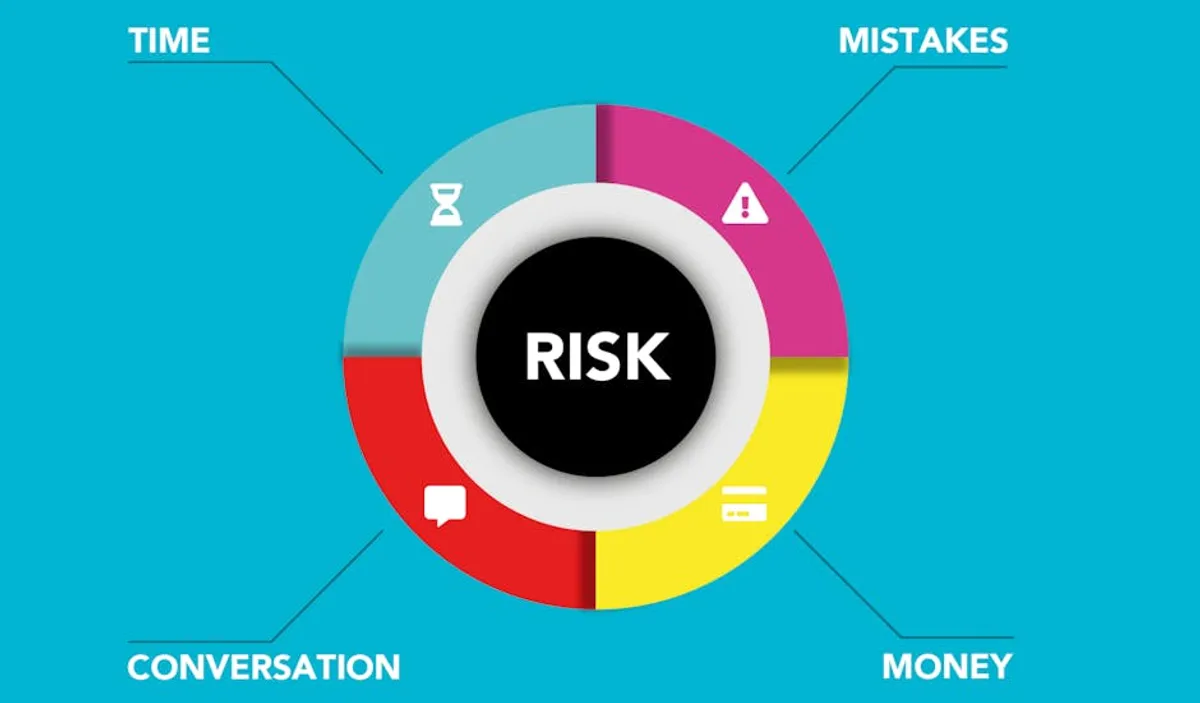
Entering the financial markets as a new trader presents significant opportunities alongside inherent risks. Without a structured approach to managing these risks, capital can deplete rapidly, often leading to premature exits from trading. Effective risk management is not merely a safeguard; it is the foundational discipline that enables sustained participation and potential growth. This involves understanding your personal tolerance for loss, implementing protective measures on every trade, and cultivating the mental fortitude to adhere to a predefined plan, even amidst market volatility. Prioritizing these principles from the outset establishes a framework for long-term viability, moving beyond speculative gambling toward a more calculated, professional endeavor.
Understanding Your Risk Profile
Defining Risk Tolerance
Before executing any trade, new traders must objectively assess their individual risk tolerance. This is not a static measure but a dynamic assessment of how much capital loss you are psychologically and financially prepared to absorb without compromising your lifestyle or emotional stability. Factors include your current financial standing, income stability, existing debts, and investment horizon. A low-risk tolerance suggests smaller position sizes and tighter stop-loss parameters, while a higher tolerance might allow for larger, but still controlled, exposures. It is crucial to distinguish between what you think you can tolerate and what you can actually afford to lose.
Practical step: Quantify your maximum acceptable loss per trade as a percentage of your total trading capital. A common starting point for new traders is 0.5% to 1% of total capital per trade.
Capital Allocation Principles
Effective risk management begins with how you allocate your trading capital. This involves designating a specific portion of your overall wealth solely for trading activities, ensuring that its loss would not create significant financial hardship. This segregated capital acts as your trading budget. Within this budget, further allocation principles dictate how much is exposed to the market at any given time. Over-leveraging or committing too large a percentage of your capital to a single trade or asset class are common pitfalls that can accelerate losses. The goal is to preserve capital to allow for learning and adaptation.
Key consideration: Never trade with funds essential for living expenses or financial obligations. Only deploy discretionary capital.
Implementing Practical Risk Controls
Position Sizing Strategies
Position sizing is the most direct method for controlling risk on individual trades. It dictates the number of shares, contracts, or units you buy or sell based on your predefined risk tolerance and the specific trade setup. Instead of arbitrarily deciding how much to invest, calculate your position size using a formula: (Trading Capital * Risk Percentage) / (Entry Price - Stop-Loss Price). This ensures that if the stop-loss is triggered, your maximum loss remains within your acceptable percentage of capital.
Example: If you have $10,000 capital and a 1% risk tolerance ($100), and your trade setup requires a $0.50 stop-loss (e.g., buying at $10.00, stop at $9.50), you would trade $100 / $0.50 = 200 shares.
Stop-Loss Orders: Your Safety Net
A stop-loss order is an instruction to your broker to close a position automatically when a security reaches a specified price. This tool is indispensable for new traders as it limits potential losses on a trade. Setting a stop-loss is not a sign of weakness; it is a critical component of a disciplined trading plan. Once placed, it should generally not be moved further away from your entry price, as this negates its protective function. The stop-loss level should be determined by technical analysis or fundamental factors that invalidate your trade hypothesis, not by arbitrary price points.
- Fixed percentage stop: Close trade if price drops X% from entry.
- Volatile stop: Based on Average True Range (ATR) to account for market volatility.
- Support/Resistance stop: Placed just below a key support level or above a resistance level.
- Time-based stop: Close trade after a certain period if it hasn't moved as expected.
Diversification, Not Dilution
While often associated with long-term investing, diversification also applies to trading, albeit with a different focus. For new traders, diversification means avoiding over-concentration in a single asset, sector, or market. This does not imply holding dozens of different instruments, which can dilute focus and returns, but rather ensuring that your active trades are not excessively correlated. For instance, simultaneously opening multiple trades in highly correlated tech stocks during a sector-wide downturn would not be true diversification. The aim is to spread risk across different, ideally uncorrelated, opportunities to mitigate the impact of adverse movements in any single position.
The Psychological Aspect of Risk
Avoiding Emotional Trading
Emotions—specifically fear and greed—are significant contributors to poor trading decisions. Fear can lead to premature exits from winning trades or holding onto losing trades too long, hoping for a recovery. Greed can result in over-sizing positions or taking on excessive risk in pursuit of larger gains. A robust risk management plan acts as an emotional buffer, providing objective rules to follow regardless of market sentiment. Adhering to your predetermined position sizes and stop-loss levels removes the subjective, often detrimental, influence of immediate emotional reactions.
Pro Tip: Develop a pre-trade checklist that you must complete before initiating any position. This checklist should include confirming your entry criteria, stop-loss level, target price, and calculated position size. This ritual helps to enforce discipline and reduce impulsive decision-making.
Maintaining a Trading Journal
A trading journal serves as an invaluable tool for self-assessment and continuous improvement. For every trade, record key details: the asset, entry price, exit price, position size, stop-loss level, target, market conditions, and, critically, your emotional state and the rationale behind your decisions. Reviewing this journal regularly allows you to identify patterns in your trading behavior, both positive and negative. It helps pinpoint recurring errors in risk management, such as inconsistent stop-loss placement or deviation from position sizing rules, providing concrete data for refining your approach.
Continuous Learning and Adaptation
Reviewing Your Performance
Regularly reviewing your trading performance is essential for long-term success. Beyond simply tracking profit and loss, analyze your risk-adjusted returns. Evaluate the effectiveness of your stop-loss placements, the accuracy of your position sizing, and how well you adhered to your trading plan. Look for trends: Are your losses consistently larger than your wins? Are you frequently hitting your stop-loss before the trade moves in your favor, suggesting poor entry timing or stop-loss placement? This analytical approach turns every trade, whether winning or losing, into a learning opportunity.
Adapting to Market Changes
Market conditions are dynamic, and a static risk management approach can quickly become ineffective. What works in a trending market may fail in a ranging or highly volatile environment. New traders must cultivate the ability to adapt their risk parameters. This might involve reducing position sizes during periods of extreme volatility, widening stop-losses to accommodate larger price swings (while still adhering to overall capital risk limits), or even stepping back from trading during uncertain periods. Flexibility, grounded in a clear understanding of current market dynamics, is key to sustained capital preservation.
Actionable Steps for Sustainable Trading
To establish a durable trading practice, new traders should integrate these risk management principles into their daily routine. Start by defining your absolute maximum acceptable loss per trade and per day/week. Always calculate your position size before entering a trade, never after. Place your stop-loss order immediately upon trade entry. Regularly review your trading journal to identify and correct behavioral patterns that deviate from your risk plan. Treat risk management as an active, ongoing process, not a one-time setup. This disciplined approach minimizes catastrophic losses and provides the necessary runway for skill development and potential profitability.
Frequently Asked Questions
What is the most important risk management rule for new traders?
The most crucial rule is to always define and limit your maximum potential loss per trade before entering it, typically by using a stop-loss order and appropriate position sizing.
How much capital should a new trader risk per trade?
New traders are generally advised to risk no more than 0.5% to 1% of their total trading capital on any single trade to protect against significant drawdowns.
Can I trade without a stop-loss order?
While technically possible, trading without a stop-loss order is highly discouraged for new traders as it exposes your entire position to unlimited downside risk, potentially leading to substantial and uncontrolled losses.
How often should I review my risk management strategy?
Your risk management strategy should be reviewed regularly, at least monthly, and especially after significant market events or periods of underperformance, to ensure it remains aligned with your capital and market conditions.