
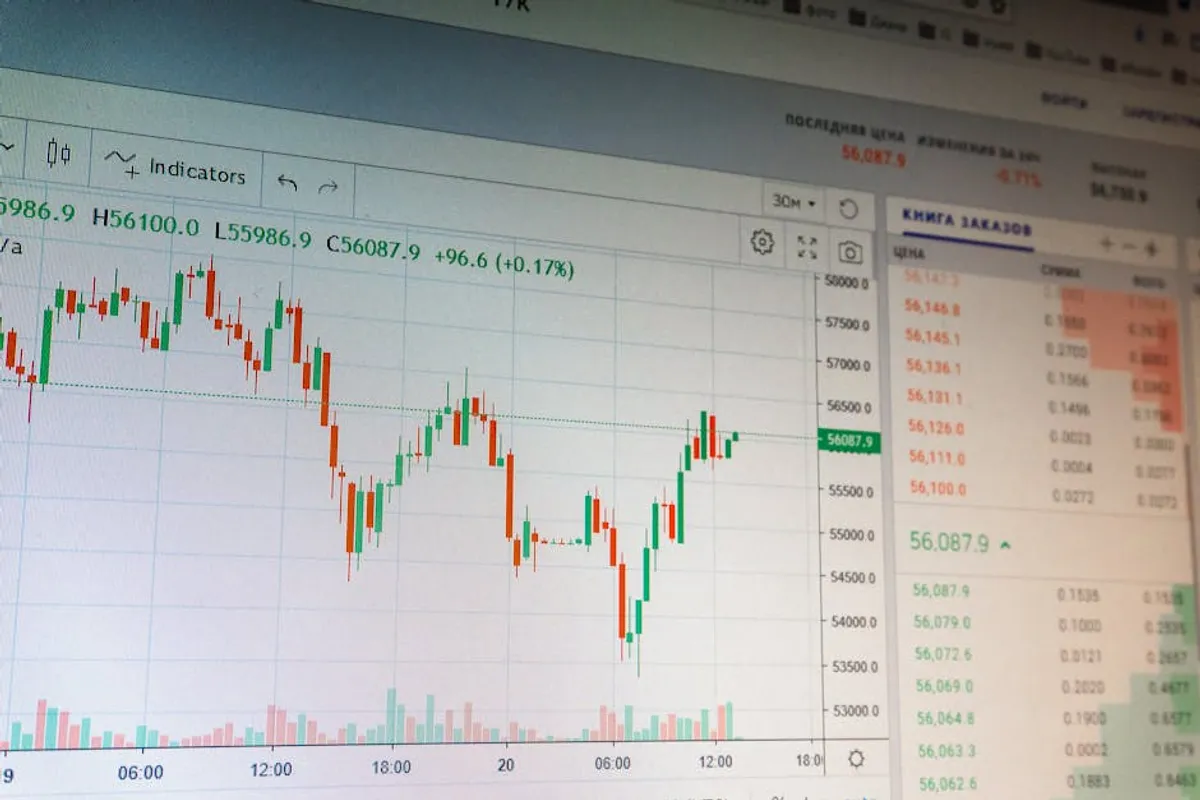
Understanding and integrating share price updates is critical for anyone operating within the financial content sphere, investor relations, or market analysis. These updates provide a dynamic snapshot of a company's valuation, reflecting market sentiment, economic shifts, and corporate performance. For businesses, access to timely and accurate share price data informs investor communications and competitive analysis. For content creators, it enables the delivery of relevant, data-driven financial news and educational resources, directly impacting audience engagement and authority. This guide breaks down the essential components, sources, and practical applications of share price updates, offering a foundational perspective for effective implementation.
Defining Share Price Updates
Share price updates refer to the real-time or delayed reporting of a publicly traded company's stock value on a financial market. This data encompasses more than just the current trading price; it includes a suite of metrics that provide context to market activity. These metrics are continuously generated as shares are bought and sold on various exchanges globally. The primary function of these updates is to offer transparency into market dynamics, enabling investors, analysts, and the public to gauge a company’s perceived value and performance.
Core Components of Share Price Data
A comprehensive share price update typically includes several key data points, each offering distinct insights into a stock’s behavior and market standing:
- Last Traded Price: The most recent price at which a share was bought or sold. This is often the headline figure.
- Open Price: The price at which a stock first traded at the beginning of a trading day.
- Close Price: The final price at which a stock traded at the end of the previous trading day.
- Day's High/Low: The highest and lowest prices at which a stock traded during the current trading day, indicating intraday volatility.
- 52-Week High/Low: The highest and lowest prices a stock has reached over the past year, providing a longer-term performance context.
- Volume: The total number of shares traded during a specific period (e.g., a day). High volume often indicates significant market interest or news.
- Market Capitalization: The total value of a company's outstanding shares, calculated by multiplying the current share price by the total number of shares. This indicates company size.
- Price-to-Earnings (P/E) Ratio: A valuation metric comparing a company's current share price to its per-share earnings. It helps assess if a stock is over- or undervalued relative to its earnings.
- Dividend Yield: The ratio of a company's annual dividend per share to its share price, indicating the return on investment from dividends.
- Change (Absolute and Percentage): The difference between the current price and a previous closing price, expressed in currency units and as a percentage. This instantly conveys daily performance.
Sourcing Share Price Information
Accessing reliable share price data requires understanding the various available sources, each with differing levels of latency, cost, and detail.
Official Exchange Websites: Stock exchanges themselves (e.g., those in New York, London, or Tokyo) provide direct, albeit often delayed, data feeds. These are authoritative but typically not designed for high-frequency programmatic access without specific subscriptions.
Established Financial News Portals: Major financial news outlets integrate real-time or near real-time data into their platforms. These are excellent for general public consumption and offer contextual news analysis alongside the data. However, direct data extraction for commercial use often falls under strict licensing terms.
Investment Brokerage Platforms: Online brokers provide their clients with robust tools and data feeds, often real-time, to facilitate trading decisions. While comprehensive, these platforms are generally closed ecosystems designed for account holders.
Financial Data API Providers: For programmatic integration into websites, applications, or internal systems, financial data API providers are the most flexible option. These services aggregate data from multiple exchanges and offer various subscription tiers based on data latency (real-time, 15-minute delayed, end-of-day), data granularity, and query limits. They are indispensable for developers building custom financial tools or content platforms.
Company Investor Relations Pages: Publicly traded companies often host their own investor relations sections, which may include stock charts and basic price data. This data is usually delayed and serves as a supplementary source for company-specific information.
Real-time vs. Delayed Data: A Critical Distinction
The timeliness of share price data is paramount and dictates its utility for different applications. Real-time data reflects transactions as they happen, typically with a latency of milliseconds to a few seconds. This is essential for active traders and high-frequency algorithms where immediate action based on current market conditions is necessary.
Delayed data, conversely, is presented after a set interval, commonly 15 or 20 minutes. This delay is a standard practice by exchanges to differentiate between free public access and premium, paid real-time feeds. For informational websites, educational content, or long-term investment analysis, delayed data is often sufficient and significantly more cost-effective, or even free. The choice between real-time and delayed data hinges on the specific use case and the financial implications of data latency.
Pro Tip: Always verify the licensing terms and data attribution requirements of any share price data source before integration. Unauthorized use or incorrect attribution can lead to legal complications and data access revocation. Ensure your chosen provider offers clear documentation on data origin and permissible usage.
Integrating Share Price Updates into Digital Properties
Incorporating share price updates into a website or application can significantly enhance its value proposition. The method of integration depends on the desired level of customization, technical resources, and budget.
Embedded Widgets: Many financial data providers offer pre-built widgets that can be embedded directly into a webpage using a simple code snippet. These widgets are typically easy to implement and require minimal technical expertise, offering basic stock charts, price tickers, or company profiles. Customization options are often limited to visual styling.
API Integration: For full control over data presentation and functionality, direct API integration is the preferred method. This involves making programmatic requests to a financial data API, receiving data in a structured format (e.g., JSON), and then parsing and displaying it according to specific design and functional requirements. API integration allows for custom charts, dynamic data tables, personalized alerts, and complex analytical tools. This approach demands development resources but offers unparalleled flexibility.
Considerations for Integration:
- Refresh Rate: Determine how frequently the data needs to be updated on your platform. Real-time requires constant API calls, impacting cost and server load.
- Error Handling: Implement robust error handling for API calls to manage connection issues or rate limits gracefully.
- Data Display: Design clear, intuitive interfaces for displaying complex financial data. Ensure readability and accessibility.
- Disclaimers: Clearly state whether data is real-time or delayed, and include any necessary legal disclaimers about investment advice.
Leveraging Share Price Data Effectively
Strategic use of share price updates can transform a digital platform from a static information source into a dynamic, authoritative financial resource. For content publishers, this means creating timely market commentary, performance comparisons, and educational pieces that directly reference current data. Businesses can enhance investor transparency by providing live or near-live stock information on their investor relations portals, fostering trust and engagement with shareholders. For developers, it opens avenues for building innovative financial tools, from portfolio trackers to market sentiment indicators. The key is to align the accuracy and latency of the data with the specific needs of the audience and the commercial objectives of the platform, ensuring that the information provided is both relevant and actionable.
Frequently Asked Questions
What is the primary difference between real-time and delayed share price data?
Real-time data reflects transactions as they occur, typically with a delay of a few seconds, making it crucial for active trading. Delayed data is presented after a set interval, usually 15 or 20 minutes, and is generally sufficient for informational purposes, news reporting, or long-term analysis.
Do I need to pay for share price updates?
Basic, delayed share price data is often available for free from various sources. However, real-time data, higher query limits, historical data, and more comprehensive financial metrics typically require a paid subscription from a financial data provider or exchange.
How can I ensure the accuracy of the share price data I'm using?
To ensure accuracy, source data from reputable providers, official stock exchanges, or well-established financial news organizations. Cross-referencing data from multiple reliable sources can also help verify information, especially for critical applications.
What are the legal considerations when displaying share price data on a website?
Legal considerations include data licensing agreements, which dictate how you can use, display, and distribute the data. Most providers require clear attribution and often mandate disclaimers stating whether the data is real-time or delayed, and that it should not be considered investment advice.