
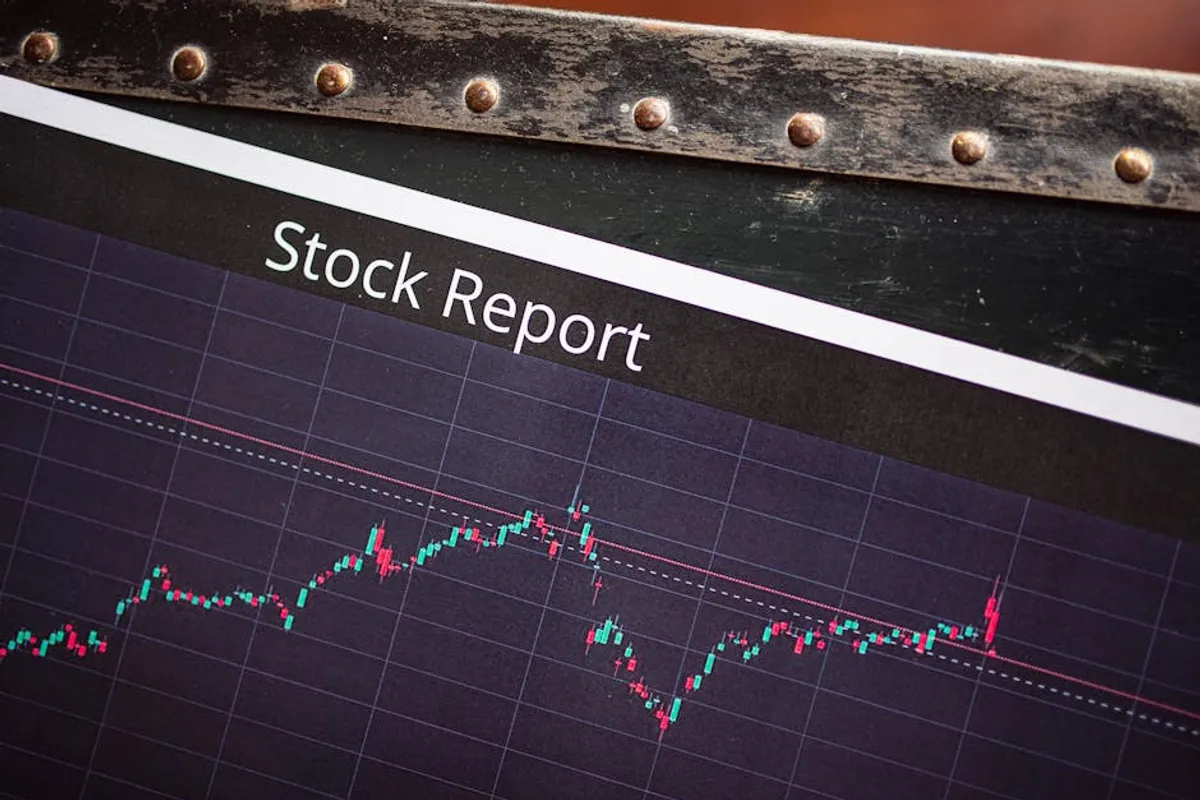
Understanding the forces that shape share price movements is fundamental for anyone involved in financial markets. It's not enough to merely observe daily fluctuations; a deeper comprehension of underlying trends, technological shifts, and information dissemination patterns is essential for informed decision-making. This article explores the critical trends influencing how share prices are updated, interpreted, and ultimately, how they move. For investors, analysts, and market participants, recognizing these dynamics offers a clearer perspective on market efficiency, risk assessment, and opportunity identification. This article explores the critical trends influencing how share prices are updated, interpreted, and ultimately, how they move, offering insights into how share prices are updated.
The Evolving Landscape of Information Dissemination
The speed and volume of information impacting share prices have transformed dramatically. Traditional quarterly reports and press releases, while still foundational, now coexist with an instant, multi-channel flow of data. This shift necessitates a re-evaluation of how market participants consume and react to news.
- Real-time News Feeds: Financial news services and aggregators deliver headlines within seconds, often before official announcements are widely distributed. This immediacy compresses reaction times for traders.
- Social Media Impact: Platforms like X (formerly Twitter) and Reddit can amplify sentiment, disseminate rumors, and even coordinate retail trading activity, leading to rapid, sometimes irrational, price swings.
- Alternative Data Sources: Beyond traditional financial statements, data from satellite imagery, credit card transactions, web traffic, and supply chain tracking offers predictive insights into company performance, influencing share prices ahead of official disclosures.
Technological Drivers of Price Dynamics
Technology underpins many of the trends shaping share price updates, from how data is processed to how trading decisions are executed.
Algorithmic Trading and High-Frequency Trading (HFT)
Automated systems now account for a significant portion of trading volume. These algorithms process news, economic indicators, and market data faster than humanly possible, executing trades in milliseconds. Their rapid reactions to specific keywords or data points can exacerbate volatility, creating flash crashes or rapid rallies based on perceived information advantages.
Artificial Intelligence and Machine Learning in Analysis
AI and ML models are increasingly used to analyze vast datasets, including unstructured text from news articles, social media, and earnings call transcripts. These systems can identify patterns, gauge sentiment, and even predict potential market reactions to events. This capability allows for more nuanced and data-driven insights into potential share price movements.
Blockchain and Distributed Ledger Technology (DLT)
While still nascent in widespread equity trading, DLT holds potential for enhancing the transparency and efficiency of share ownership records and settlement processes. Should DLT solutions become more integrated, they could reduce settlement times, mitigate counterparty risk, and provide immutable records of transactions, thereby influencing price discovery through increased trust and speed.
Pro Tip: Do not mistake information volume for insight. The sheer quantity of real-time data can be overwhelming. Focus on developing robust filters and analytical frameworks to discern actionable signals from market noise. Over-reliance on a single, unverified source can lead to significant misjudgments.
Market Structure and Regulatory Shifts
The operational framework of financial markets also plays a role in how share prices are updated and react.
Fragmentation of Trading Venues
Equity trading is no longer confined to a few major exchanges. The proliferation of alternative trading systems (ATS), dark pools, and regional exchanges means that price discovery occurs across multiple venues. This fragmentation can lead to slight price discrepancies and challenges in obtaining a consolidated, real-time view of a security's true market price.
Impact of Regulatory Changes
New regulations, such as those governing market data access or transparency requirements, can alter information flows and trading behavior. For instance, rules mandating public dissemination of certain trade data can reduce information asymmetry, while others might inadvertently create opportunities for specific types of market participants.
Rise of Retail Investor Influence
The accessibility of commission-free trading platforms has empowered a new generation of retail investors. Their collective actions, often coordinated via online communities, can exert significant pressure on specific stock prices, sometimes decoupling them from traditional fundamental valuations. This trend highlights the growing importance of monitoring crowd sentiment.
Behavioral Economics and Investor Sentiment
Beyond pure data and technology, human psychology remains a potent force in share price dynamics.
Sentiment Amplification
Social media and instant communication channels can rapidly amplify investor sentiment, both positive and negative. Fear, greed, and herd mentality can drive prices beyond what fundamentals suggest, leading to bubbles or sharp corrections. Monitoring sentiment indicators, often derived from text analysis of online discussions, becomes a crucial trend to watch.
Narrative-Driven Trading
Investors often respond to compelling narratives about a company's future or a sector's potential. These narratives, whether based on innovation, disruption, or market dominance, can sustain valuations even in the face of mixed financial performance. Share price updates often reflect the market's ongoing assessment of these narratives.
Navigating Share Price Updates: A Strategic Approach
To effectively leverage share price updates, market participants must adopt a multi-faceted strategy that combines technological sophistication with critical analysis. To effectively leverage share price updates, market participants must adopt a multi-faceted strategy that combines technological sophistication with critical analysis and best practices for share price updates.
Key Considerations:
- Diversify Information Sources: Rely on a broad spectrum of inputs, from traditional financial news to alternative data and sentiment analysis tools, to gain a holistic view.
- Understand Data Latency: Be aware that not all data is created equal in terms of speed. Some feeds are milliseconds faster, which can be critical for high-frequency strategies, while others offer deeper, slower insights.
- Focus on Context: A single share price update or news item rarely tells the whole story. Interpret data within the broader context of market conditions, industry trends, and company fundamentals.
- Implement Robust Monitoring: Utilize tools that provide customizable alerts and dashboards, allowing for timely reactions to significant share price movements or related news.
- Develop an Analytical Framework: Avoid purely reactive trading. Instead, build a framework that helps you distinguish between temporary noise and significant, trend-defining shifts in price.
Frequently Asked Questions
How do algorithms impact share price updates?
Algorithms process vast amounts of market data and news in milliseconds, executing trades automatically. Their speed can amplify volatility and cause rapid price shifts in response to specific data points or keywords, often before human traders can react.
What is "alternative data" in the context of share prices?
Alternative data refers to non-traditional datasets used to gain insights into company performance or market trends. Examples include satellite imagery of parking lots, credit card transaction data, web traffic analytics, and supply chain information, which can offer predictive signals ahead of official company reports.
Can social media reliably predict stock movements?
Social media can influence stock movements, particularly for smaller capitalization stocks or during "meme stock" phenomena, by amplifying sentiment and coordinating retail investor activity. However, it is generally not considered a reliable standalone predictor due to its susceptibility to misinformation, hype, and rapid shifts in sentiment.
What role do regulatory changes play in share price trends?
Regulatory changes can significantly impact share price trends by altering market structure, information transparency, and trading rules. New regulations might affect data dissemination, trading costs, or even the types of financial products available, thereby influencing how prices are formed and how quickly they react to new information.