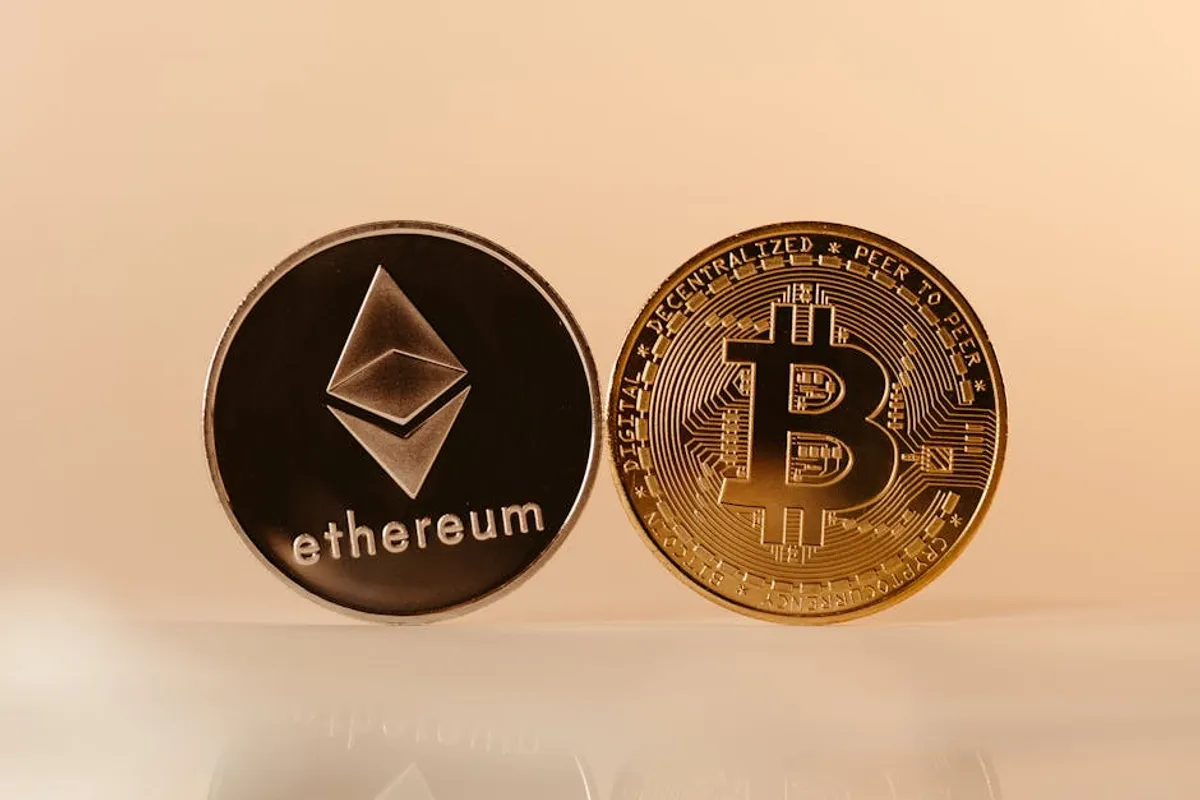
Understanding the current valuation and future trajectory of Ethereum (ETH) requires a granular assessment of both its underlying network fundamentals and broader market forces. For investors, developers, and market observers, ETH’s price is not merely a speculative metric but a reflection of its utility, adoption, and the strategic direction of the entire decentralized ecosystem it underpins. This analysis dissects the primary factors influencing ETH’s market position, offering a framework for interpreting its movements beyond daily volatility. Understanding these factors also involves watching other major cryptocurrency prices for broader market trends.
Current Ethereum Market Trajectory
Ethereum’s price action typically reflects a blend of technical upgrades, network activity, and prevailing sentiment across the wider cryptocurrency market. Recent periods have shown ETH responding to significant protocol advancements, such as the transition to Proof-of-Stake (the Merge), which fundamentally altered its economic model by reducing new ETH issuance and enabling staking rewards. While daily fluctuations are common, the longer-term trend often correlates with the expansion of its utility across decentralized finance (DeFi), non-fungible tokens (NFTs), and enterprise applications. Market participants closely monitor on-chain metrics, including transaction counts, active addresses, and total value locked (TVL) in DeFi protocols, as these provide tangible indicators of demand and network health.
Core Drivers of Ethereum's Valuation
Supply-Side Mechanics and Scarcity
Ethereum's economic model has evolved to incorporate mechanisms that directly influence its circulating supply, creating potential scarcity. These mechanisms are critical for understanding ETH's long-term value proposition.
- EIP-1559 and the Burn Mechanism: Implemented in August 2021, Ethereum Improvement Proposal 1559 introduced a base fee for each transaction that is burned rather than paid to miners. This mechanism makes ETH a deflationary asset under certain network conditions, particularly during periods of high demand. The continuous burning of ETH reduces its supply over time, exerting upward pressure on its price if demand remains constant or increases.
- Staking Dynamics: With the transition to Proof-of-Stake, ETH holders can stake their tokens to secure the network and earn rewards. This process locks up a significant portion of the circulating supply, reducing the amount available on exchanges for trading. As more ETH is staked, the effective circulating supply decreases, which can contribute to price appreciation. The yield offered by staking also attracts long-term holders, further reinforcing supply constraints.
Demand-Side Utility and Ecosystem Growth
The demand for ETH is fundamentally tied to its role as the native asset of the Ethereum network, powering a vast ecosystem of decentralized applications.
- Decentralized Finance (DeFi): Ethereum remains the foundational layer for the majority of DeFi protocols, including decentralized exchanges, lending platforms, and stablecoin issuance. Users require ETH to pay for transaction fees (gas) and often to participate in governance or as collateral within these protocols. The total value locked (TVL) in Ethereum-based DeFi protocols serves as a strong indicator of demand for the network's utility and, by extension, for ETH itself.
- Non-Fungible Tokens (NFTs): The burgeoning NFT market largely operates on Ethereum. Minting, trading, and transferring NFTs necessitate ETH for gas fees. High-profile NFT sales and sustained interest in digital collectibles drive significant transaction volume, directly increasing demand for ETH.
- Enterprise and DApp Adoption: Major corporations and developers continue to build decentralized applications (DApps) and explore blockchain solutions on Ethereum. As these applications gain traction and scale, they generate consistent demand for network resources, translating into demand for ETH.
Network Evolution and Scalability
Ongoing protocol upgrades are designed to enhance Ethereum's scalability, security, and sustainability, directly impacting its long-term viability and perceived value.
- Post-Merge Upgrades (e.g., Dencun): Following the Merge, subsequent upgrades like Dencun (combining "Cancun" and "Deneb") aim to further improve the network. Dencun introduced "proto-danksharding" via EIP-4844, which significantly reduces transaction costs for Layer 2 rollups by introducing 'blobs' for data storage. These improvements make the network more efficient and cost-effective, attracting more users and developers, which in turn fuels demand for ETH.
- Layer 2 Scaling Solutions: While Ethereum's mainnet handles core settlement, Layer 2 solutions (e.g., optimistic rollups, ZK-rollups) process transactions off-chain and then batch them onto the mainnet. The success and adoption of these Layer 2s are crucial for Ethereum's scalability. While L2s reduce direct mainnet gas fees, they still rely on Ethereum for security and data availability, indirectly driving demand for ETH as the underlying asset that secures the entire ecosystem.
External Market Influences
Beyond its internal mechanics, ETH's price is also sensitive to broader economic and regulatory landscapes.
Pro Tip: Monitor global macroeconomic indicators like inflation rates, interest rate decisions by central banks, and overall investor appetite for risk assets. These factors often dictate capital flow into and out of the cryptocurrency market, influencing ETH's price irrespective of its internal fundamentals.
- Broader Cryptocurrency Market Trends: ETH often correlates with the performance of Bitcoin (BTC) and the overall cryptocurrency market. A general bull or bear market typically pulls ETH along, albeit with its own unique volatility profile.
- Macroeconomic Environment and Regulation: Global economic conditions, such as inflation, interest rates, and geopolitical events, can influence investor sentiment towards risk assets like cryptocurrencies. Additionally, evolving regulatory frameworks around digital assets can impact institutional adoption and market stability, directly affecting ETH's perceived risk and value.
Navigating Ethereum's Volatility
Ethereum's market is characterized by significant volatility, driven by a combination of rapid technological advancements, evolving regulatory landscapes, and speculative trading. Understanding these dynamics is crucial for anyone engaging with ETH. Price swings can be amplified by news cycles, social media sentiment, and the actions of large institutional players. For example, a major protocol upgrade announcement can trigger a rally, while an unexpected regulatory crackdown can lead to sharp declines. Analyzing on-chain data, market depth, and derivative markets provides additional context for anticipating potential price movements.
Key Considerations for Ethereum Participants
For those involved in the Ethereum ecosystem, understanding these factors is paramount. The interplay between supply reduction mechanisms, increasing network utility, and continuous technological advancement forms the basis of ETH's long-term value proposition. While external market forces introduce short-term volatility, the fundamental strength of Ethereum lies in its robust developer community, expanding use cases, and commitment to scalability. Regular assessment of these drivers provides a clearer picture of ETH's market position and potential.
Frequently Asked Questions
What is the primary driver of ETH's demand?
The primary driver is its utility as the native gas token for transactions and smart contract execution across the vast Ethereum ecosystem, encompassing DeFi, NFTs, and numerous DApps.
How does Ethereum's staking impact its price?
Staking ETH removes tokens from the active circulating supply, reducing sell pressure and potentially increasing scarcity. This mechanism, combined with staking rewards, incentivizes long-term holding.
What role do Layer 2 solutions play in ETH's valuation?
Layer 2 solutions enhance Ethereum's scalability and reduce transaction costs for users, making the ecosystem more accessible and efficient. This increased utility and adoption indirectly drive demand for ETH as the core security and settlement layer.
Are macroeconomic factors more influential than network upgrades?
Both are significant. Macroeconomic factors often dictate broader market sentiment and capital flows, impacting ETH's short-to-medium term price. Network upgrades, however, drive fundamental value and long-term utility, shaping its intrinsic worth and future potential.