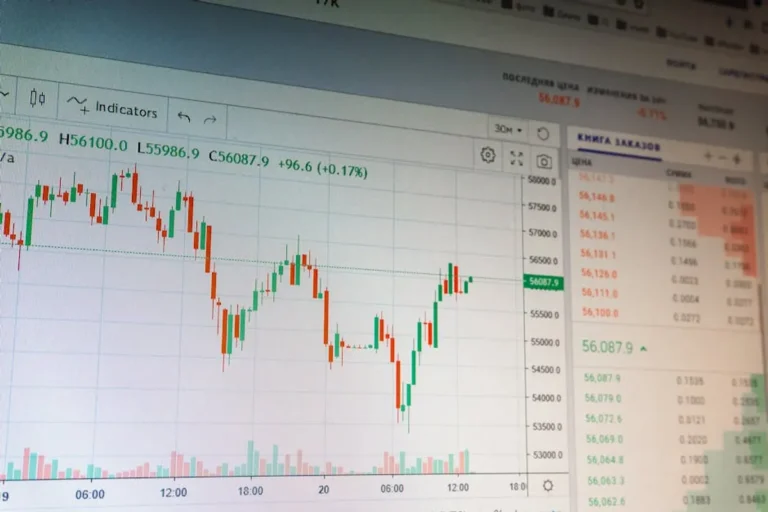

Polygon, often recognized by its native token MATIC, operates as a Layer 2 scaling solution for the Ethereum blockchain. It addresses critical challenges such as high transaction fees and slow transaction speeds, which have historically limited Ethereum's widespread adoption for daily transactions and high-throughput applications. For businesses, developers, and investors navigating the decentralized ecosystem, understanding Polygon's architecture, its application in payments and broader utility, and its market position is essential for strategic decision-making. This framework provides a clear perspective on Polygon's technical capabilities, its economic model, and its trajectory within the competitive blockchain landscape.
Polygon's Role in Blockchain Scalability
The fundamental premise of Polygon is to enhance the functionality of existing blockchains, primarily Ethereum, by providing a framework for building and connecting scalable solutions. It acts as a multi-chain system, designed to aggregate scalable solutions on Ethereum, supporting a diverse range of applications and use cases.
The Need for Layer 2 Solutions
Ethereum, while robust and secure, faces inherent limitations in scalability due to its proof-of-work (soon proof-of-stake) consensus mechanism and block size constraints. This leads to network congestion, resulting in elevated gas fees and prolonged transaction confirmation times, particularly during periods of high demand. These issues hinder mass adoption for micro-transactions, gaming, and other applications requiring frequent, low-cost interactions. Layer 2 solutions like Polygon offload transactions from the main Ethereum chain, process them more efficiently, and then periodically settle them back onto the mainnet, inheriting Ethereum's security guarantees.
How Polygon Achieves Scalability
Polygon employs a modular and flexible framework that supports various scaling technologies. Its primary component is the Polygon PoS (Proof-of-Stake) Chain, a sidechain compatible with the Ethereum Virtual Machine (EVM). This chain offers a fast and low-cost environment for decentralized applications (dApps) and smart contracts. Beyond the PoS chain, Polygon is actively developing and integrating several Zero-Knowledge (ZK) rollup solutions, such as Polygon zkEVM, Polygon Miden, and Polygon Zero, alongside optimistic rollups and other scaling mechanisms. This multi-pronged approach allows developers to choose the scaling solution best suited for their specific application requirements, balancing security, performance, and cost.
Facilitating Efficient Crypto Payments
One of Polygon's most immediate and impactful applications is its ability to facilitate fast and inexpensive cryptocurrency transactions. This capability positions it as a viable infrastructure for everyday payments and remittances.
Transaction Speed and Cost Advantages
On the Polygon PoS chain, transactions typically confirm within seconds, a stark contrast to Ethereum's minutes-long confirmation times. More critically, transaction fees (gas fees) on Polygon are often fractions of a cent, making it economically feasible for frequent transfers and micro-payments that would be prohibitively expensive on the Ethereum mainnet. This efficiency stems from its dedicated network for transaction processing and its PoS consensus mechanism, which requires less computational power than Ethereum's current model.
Real-World Payment Integrations
Businesses and platforms seeking to integrate blockchain-based payment solutions can leverage Polygon for its operational advantages. This includes:
- E-commerce platforms: Enabling customers to pay with various cryptocurrencies without incurring high network fees or delays.
- Gaming applications: Facilitating in-game purchases, rewards distribution, and NFT trading with minimal transaction costs.
- Decentralized autonomous organizations (DAOs): Managing treasury funds and member payouts efficiently.
- Remittance services: Offering a faster and cheaper alternative for cross-border money transfers compared to traditional financial systems.
These integrations underscore Polygon's utility as a practical payment rail for the evolving digital economy.
Pro Tip: When evaluating Polygon for payment solutions, consider the trade-offs between the Polygon PoS chain's speed and cost-effectiveness versus the higher security assurances of ZK-rollup solutions, which are more computationally intensive but inherit stronger guarantees from Ethereum's mainnet. The choice depends on the specific security and finality requirements of the payment application.
Expanding Utility: Beyond Transactions
While payments are a significant use case, Polygon's utility extends far beyond simple value transfer. It has become a foundational layer for a broad spectrum of decentralized applications and emerging digital economies.
Decentralized Applications (dApps) and Gaming
Polygon hosts a substantial and growing ecosystem of dApps, including decentralized exchanges, lending platforms, and prediction markets. Its low-cost and high-throughput environment makes it particularly attractive for blockchain gaming, where frequent, low-value transactions (e.g., minting in-game items, trading virtual assets) are common. Developers can deploy existing EVM-compatible smart contracts on Polygon with minimal modifications, reducing development friction.
Non-Fungible Tokens (NFTs) and Digital Collectibles
The high gas fees on Ethereum have often made NFT minting and trading inaccessible for many. Polygon offers a more economical alternative, fostering a vibrant NFT ecosystem. Artists, creators, and collectors can mint, buy, and sell NFTs on Polygon with significantly lower transaction costs, democratizing participation in the digital collectibles market. This has led to the emergence of numerous NFT projects and marketplaces built on the network.
Decentralized Finance (DeFi) Ecosystem
Polygon has become a critical component of the broader DeFi landscape. Many prominent DeFi protocols have deployed versions of their platforms on Polygon, allowing users to access services like lending, borrowing, and yield farming with reduced fees and faster execution. This expansion has increased liquidity and accessibility within the DeFi sector, attracting users who might be deterred by Ethereum's operational costs.
Enterprise and Web2 Integration
Beyond native crypto applications, Polygon is exploring solutions for enterprise adoption and Web2 integration. Its modular architecture allows for the creation of custom, application-specific blockchains (app-chains) that can cater to specific business needs, offering privacy, compliance features, and tailored performance. This approach aims to bridge traditional businesses with blockchain technology, leveraging Polygon's scalability for diverse enterprise use cases.
Market Outlook and Growth Drivers
Polygon's market position is influenced by its technological advancements, ecosystem growth, and the broader trends within the blockchain industry. Its outlook is tied to its ability to maintain competitive advantages and adapt to evolving demands.
Adoption Metrics and Network Activity
Key indicators of Polygon's market health include the number of active addresses, daily transactions, total value locked (TVL) in its DeFi protocols, and the number of dApps deployed. Consistent growth in these metrics signals increasing adoption and utility. The network's ability to attract and retain developers and users is a primary driver of its long-term value proposition. Partnerships with major brands and institutions also contribute to its visibility and perceived stability.
Competitive Landscape and Innovation
Polygon operates in a highly competitive environment, with other Layer 2 solutions (e.g., Optimism, Arbitrum, zkSync) and alternative Layer 1 blockchains (e.g., Solana, Avalanche) vying for developer and user attention. Its strategy of supporting multiple scaling technologies, particularly its strong focus on ZK-rollups, positions it for future innovation. The transition to Polygon 2.0, which envisions an interconnected network of ZK-powered Layer 2 chains, aims to further enhance its scalability, interoperability, and sovereignty.
Future Developments and Upgrades
The long-term market outlook for Polygon is significantly shaped by its development roadmap. The Polygon 2.0 vision, which includes a new architecture for a unified network of ZK-powered Layer 2 chains, shared liquidity, and a redesigned tokenomics model for MATIC (potentially transitioning to POL), represents a significant evolution. These upgrades are designed to future-proof the network, offering enhanced scalability, security, and a more seamless user experience across its ecosystem.
Strategic Considerations
For those evaluating Polygon, its established ecosystem, diverse scaling solutions, and developer-friendly environment offer distinct advantages. The ongoing evolution towards Polygon 2.0 indicates a commitment to long-term scalability and interoperability, positioning it as a key infrastructure player in the broader blockchain landscape. Understanding these technical and strategic shifts is critical for assessing its role in future decentralized applications and digital economies.
Frequently Asked Questions
What is the primary purpose of Polygon (MATIC)?
Polygon's primary purpose is to provide a scalable and cost-effective framework for building and connecting blockchain networks, mainly as a Layer 2 solution for Ethereum, to address its scalability and high transaction fee issues.
How does Polygon improve transaction speeds and reduce costs?
Polygon achieves this through its Proof-of-Stake (PoS) sidechain, which processes transactions off the main Ethereum chain. This dedicated network allows for faster block generation and significantly lower gas fees compared to the Ethereum mainnet.
Can Polygon be used for enterprise applications?
Yes, Polygon's modular architecture supports the creation of custom, application-specific blockchains (app-chains) that can be tailored to enterprise requirements, including features for privacy and compliance, making it suitable for various business use cases.
What is Polygon 2.0?
Polygon 2.0 is an ambitious upgrade envisioning a network of interconnected, ZK-powered Layer 2 chains that share liquidity and security. It includes a new architecture, a redesigned tokenomics model, and enhanced interoperability across the Polygon ecosystem.