
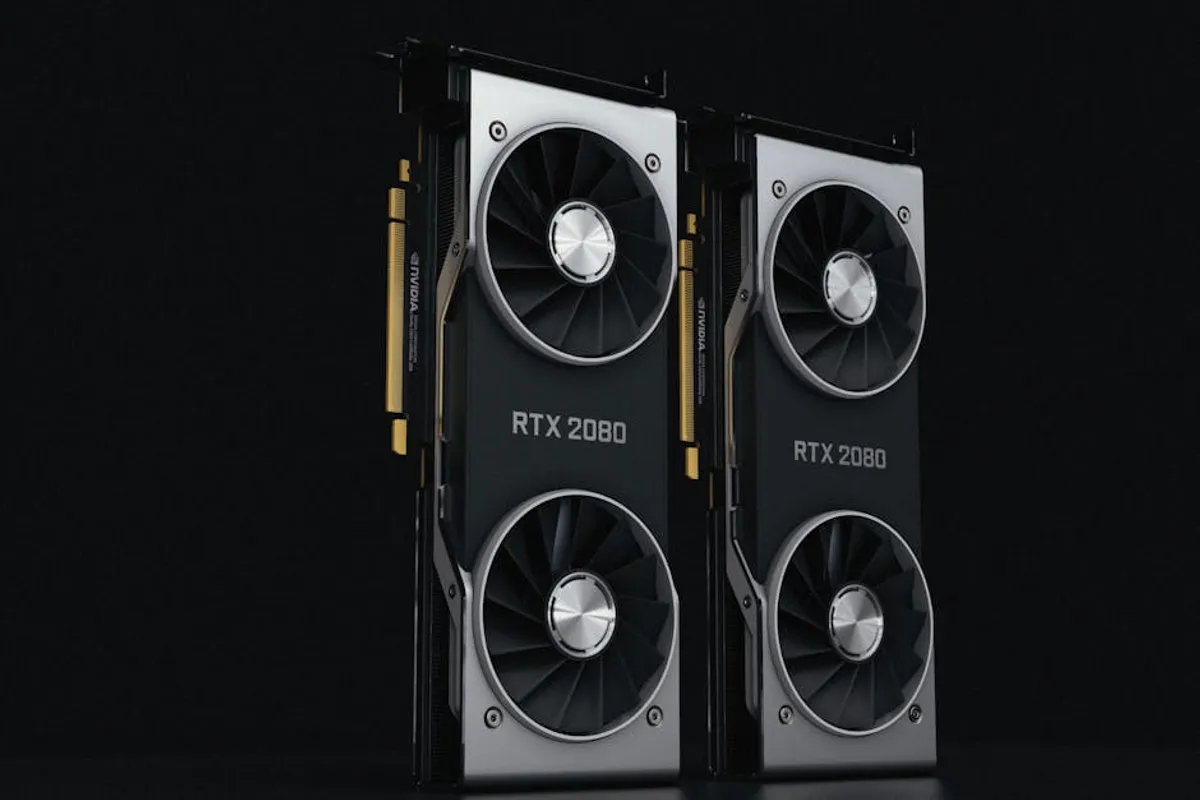
Nvidia's share price movements are a central focus for market analysts and investors, reflecting not only the company's performance but also broader shifts in the technology sector. Understanding the underlying forces that shape its valuation requires a detailed examination of both macro-level market trends and specific operational drivers. For anyone tracking the semiconductor industry, the AI revolution, or the future of computing, dissecting Nvidia's trajectory offers critical insights into the commercial landscape.
Market Trends Influencing Nvidia's Valuation
Nvidia operates at the confluence of several powerful market trends, each contributing to the demand for its specialized hardware and software platforms. These trends create the foundational environment in which the company's financial performance is judged.
The AI and Data Center Expansion
The most significant market trend impacting Nvidia is the explosive growth of artificial intelligence, particularly generative AI models. This expansion directly fuels demand for high-performance computing infrastructure. Data centers, both enterprise and hyperscale cloud providers, are rapidly deploying Nvidia's Graphics Processing Units (GPUs) to handle the intensive parallel processing required for AI training and inference. This segment has become Nvidia's primary revenue driver, overshadowing its traditional gaming business in recent years. The continuous innovation in AI algorithms and the increasing scale of models ensure sustained demand for more powerful and efficient processing units.
Shifting Dynamics in the Gaming Sector
Historically, Nvidia built its brand and market share on the strength of its GeForce gaming GPUs. While still a substantial revenue stream, the gaming market's influence on Nvidia's overall valuation has become more cyclical and less dominant compared to data center growth. Factors such as new console generations, PC upgrade cycles, and the broader economic climate for consumer discretionary spending continue to affect this segment. However, the gaming division also benefits from technological spillover from AI research, such as ray tracing and DLSS (Deep Learning Super Sampling), which enhance visual fidelity and performance.
Geopolitical and Supply Chain Considerations
The global geopolitical landscape, especially the relationship between the United States and China, significantly impacts Nvidia's market access and supply chain. Export controls on advanced AI chips to certain regions can limit potential revenue, while also spurring domestic development efforts in those countries. Furthermore, the reliance on a few key foundries, primarily TSMC, for manufacturing advanced semiconductors introduces supply chain vulnerabilities and capacity constraints. Any disruption in these areas can affect Nvidia's ability to meet demand and, consequently, its revenue and share price.
Macroeconomic Headwinds and Tailwinds
Broader macroeconomic conditions, such as interest rates, inflation, and overall investor sentiment towards growth stocks, play a role in how Nvidia's valuation is perceived. During periods of high interest rates, investors may de-risk by favoring less speculative assets, potentially impacting high-growth tech stocks. Conversely, a robust economic environment and strong corporate spending on technology infrastructure can act as tailwinds. The availability of capital for AI startups and large-scale data center investments directly correlates with Nvidia's sales pipeline.
Key Drivers of Nvidia's Share Price
Beyond broad market trends, specific internal and competitive factors directly drive Nvidia's financial performance and investor confidence.
Financial Performance and Guidance
Quarterly earnings reports are critical catalysts for Nvidia's share price. Investors scrutinize revenue growth, profit margins, and, crucially, future guidance. Strong performance in the Data Center segment, particularly driven by demand for its latest AI accelerators like the H100 and upcoming Blackwell series, often leads to positive market reactions. The company's ability to maintain high gross margins, indicative of its pricing power and technological lead, is also a key metric. Any deviation from analyst expectations, positive or negative, can trigger significant share price movements.
Product Innovation and Ecosystem Dominance
Nvidia's sustained leadership stems from its continuous innovation in GPU architecture and its comprehensive software ecosystem, CUDA. The CUDA platform, with its extensive libraries and developer tools, creates a significant barrier to entry for competitors. It locks in developers and researchers, making it difficult to switch to alternative hardware. New product launches, such as next-generation GPUs for AI and data centers, are closely watched for their performance improvements, power efficiency, and market adoption. The breadth of Nvidia's offerings, from hardware to networking (InfiniBand) and software, reinforces its ecosystem dominance.
Competitive Landscape and Strategic Partnerships
While Nvidia holds a dominant position in the AI chip market, competition is intensifying. Rivals like AMD are developing their own high-performance AI accelerators (e.g., MI300X), and major cloud providers (Google with TPUs, Amazon with Inferentia/Trainium) are investing heavily in custom silicon. Nvidia's ability to maintain its technological lead, accelerate its product cycles, and forge strategic partnerships with cloud providers, server manufacturers, and AI software companies is vital. These partnerships help integrate Nvidia's solutions deeper into the AI infrastructure stack, ensuring continued market penetration.
Pro Tip: When evaluating Nvidia's share price, distinguish between short-term market sentiment driven by news cycles and long-term fundamental drivers. Focus on the company's innovation pipeline, ecosystem strength, and its ability to capitalize on secular growth trends like AI, rather than just quarterly fluctuations.
Supply Chain Management and Capacity
The ability to secure adequate manufacturing capacity from partners like TSMC is paramount. High demand for Nvidia's advanced chips has, at times, led to supply constraints, impacting revenue recognition. Effective supply chain management, including securing wafer allocations and managing logistics, directly influences Nvidia's ability to meet market demand and capitalize on growth opportunities. Investments in alternative packaging technologies and diversification of manufacturing could also become increasingly important.
Factors to Monitor for Future Performance
- Data Center Revenue Growth: Continued expansion and diversification beyond hyperscalers.
- AI Software and Services: Development of new monetization avenues for its AI platforms.
- Competitive Responses: How rivals' new products impact market share and pricing power.
- Geopolitical Developments: Changes in trade policies and export controls.
- Innovation Pace: Success of next-generation architectures and ecosystem enhancements.
- Automotive Segment: Progress in autonomous driving platforms and partnerships.
Navigating Nvidia's Market Dynamics
Nvidia's position as a critical enabler of the AI revolution places its share price at the forefront of technological and financial discussions. For market participants, understanding the interplay of broad market trends—like the insatiable demand for AI compute and the evolving gaming landscape—with specific corporate drivers—such as product innovation, financial performance, and strategic partnerships—is essential. The company's unique ecosystem advantage, built around CUDA, provides a significant moat, but ongoing competitive pressures and geopolitical shifts necessitate continuous vigilance. Investors and analysts must look beyond headline numbers to the underlying technological leadership and strategic execution that underpin Nvidia's long-term value proposition.
Frequently Asked Questions
What are Nvidia's primary revenue streams?
Nvidia's primary revenue streams are currently dominated by its Data Center segment, which includes GPUs and networking solutions for AI and high-performance computing. The Gaming segment, professional visualization, and automotive divisions also contribute significantly.
How does AI development impact Nvidia's share price?
The rapid development and adoption of AI, especially generative AI, directly drives demand for Nvidia's high-performance GPUs, which are essential for AI training and inference. This increased demand leads to higher revenue and profitability, positively impacting the share price.
What are the main risks to Nvidia's growth?
Key risks include intensifying competition from other chipmakers and custom silicon developers, potential supply chain disruptions, geopolitical tensions impacting market access or manufacturing, and a slowdown in overall AI investment or data center expansion.
How does competition affect Nvidia's market position?
Competition from companies like AMD and Intel, along with the development of custom AI chips by major cloud providers, could challenge Nvidia's market share and potentially pressure its pricing power. Nvidia mitigates this through continuous innovation and its strong software ecosystem.